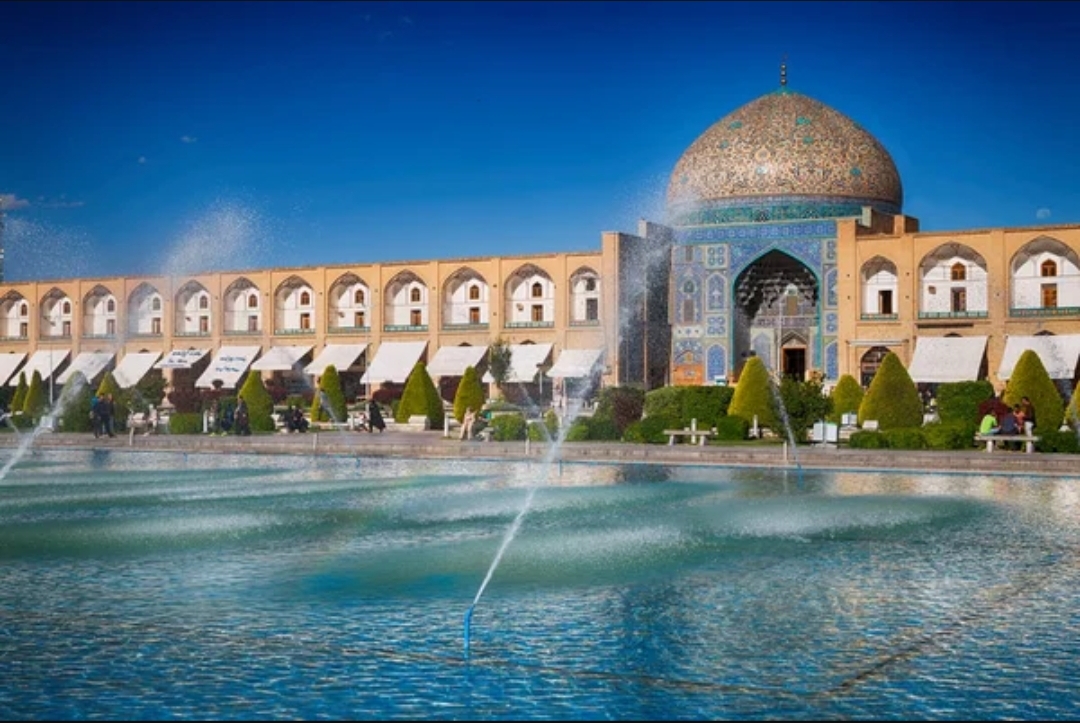
Persia remembers what modern empires and rogue states forget: The West sees Iran. Iran sees Persia. Markets are beginning to feel the difference. Empires often assume they are dealing with a country. They are not. They are dealing with a civilization. Persia is layered, patient, and historically accustomed to absorbing outsiders rather than collapsing under them. That distinction matters more than many strategists expect.
The war that looked simple
The initial logic felt clean: apply overwhelming force, remove leadership, degrade capability, force a political outcome. That model only works if the target is weaker than the theory. Iran is not. It is not a militia or a brittle regime held together by fear. It is continuity—culture, institutions, networks—that survives even when infrastructure is damaged.
Damage is not decision
Metrics accumulate fast: sorties flown, assets destroyed. Those numbers create the appearance of progress. But wars are decided by outcomes: has behavior changed, has the future been altered? The battlefield may suggest dominance while the system adapts and resists. When those signals diverge, history becomes uncomfortable.
The real battlefield is systemic. This is not only a war inside a country. It’s a war against systems that depend on that geography. The Strait of Hormuz carries roughly 20 million barrels per day—nearly a quarter of global seaborne oil. Interruptions ripple through energy, shipping, insurance, food, and fertilizers. Short disruptions are shocks. Prolonged disruptions become structural: inflation without growth, scarcity without collapse.
The illusion of control
Controlling the sky is not the same as controlling outcomes. Air power destroys; it cannot rebuild legitimacy or impose acceptance. When force fails to achieve political aims, escalation follows: more targets, more strikes, less clarity.
The strategic and domestic frictions
Whose war is this—strategically? When interests, allies’ priorities, and political pressures blur, decision-making fragments. Domestically, unclear purpose shows up first in prices, then policy, then constrained public discourse. Pressure replaces clarity, and fragility follows.
Investment implications
Markets are already repricing reality. This is not a short shock-and-awe cycle—it’s a structural shift. When a significant share of global energy is constrained and bypass options are limited, repricing starts with oil and cascades to fertilizers, metals, shipping, and food.
What benefits: – **Energy** (constrained supply) – **Commodities** (fertilizer, metals, food inputs) – **Hard assets** – **Volatility trades.**
What struggles: – **Growth dependent on stability** – **Long-duration assets** – **Fragile supply chains** – **Consumption driven by low energy costs**
Persia’s advantage and where this leads
The West sees a problem to be solved. Persia sees time. Civilizations are optimized for endurance; empires are optimized for action. Without appetite for invasion, a clear end state, or willingness to absorb prolonged cost, the likely outcome is not transformation but adjustment—an uneasy deal after damage that no one can easily undo.
Closing thought
The real danger isn’t a catastrophic failure. It’s doing “just well enough” to believe the initial assumptions were correct—while the system built around Persia quietly changes.
Thoughts? How are you rethinking risk and portfolios in light of system-level disruptions?
If you’re an investor who wants to:
Reassess allocations for a deleveraging cycle
Stress-test portfolios against credit shocks
Explore opportunities in value, real assets, bonds, and Emerging Markets
Let’s connect. DM me to discuss a disciplined plan for capital preservation and opportunity capture.