April 28 Recap: Quiet Risk, Weakening Structure.
Markets moved modestly lower on April 28, but the real story wasn’t in the headline decline. The S&P 500 dropped roughly 0.5%, the Nasdaq underperformed, and small-caps in the Russell 2000 fell over 1%. Treasuries bear-flattened, with the 2-year yield climbing back toward 3.84% and the 30-year hovering near the critical 5% level. Globally, sentiment was muted: Europe lacked conviction amid energy and geopolitical sensitivities, Japan responded to a firmer Bank of Japan tone, and China continued to drift on soft growth signals. Oil rose to $103 WTI, gold dipped below $4,600, and Bitcoin eased towards $76,000. Yet the VIX slipped below 18 — a reminder that low headline volatility often masks rising risks beneath the surface.
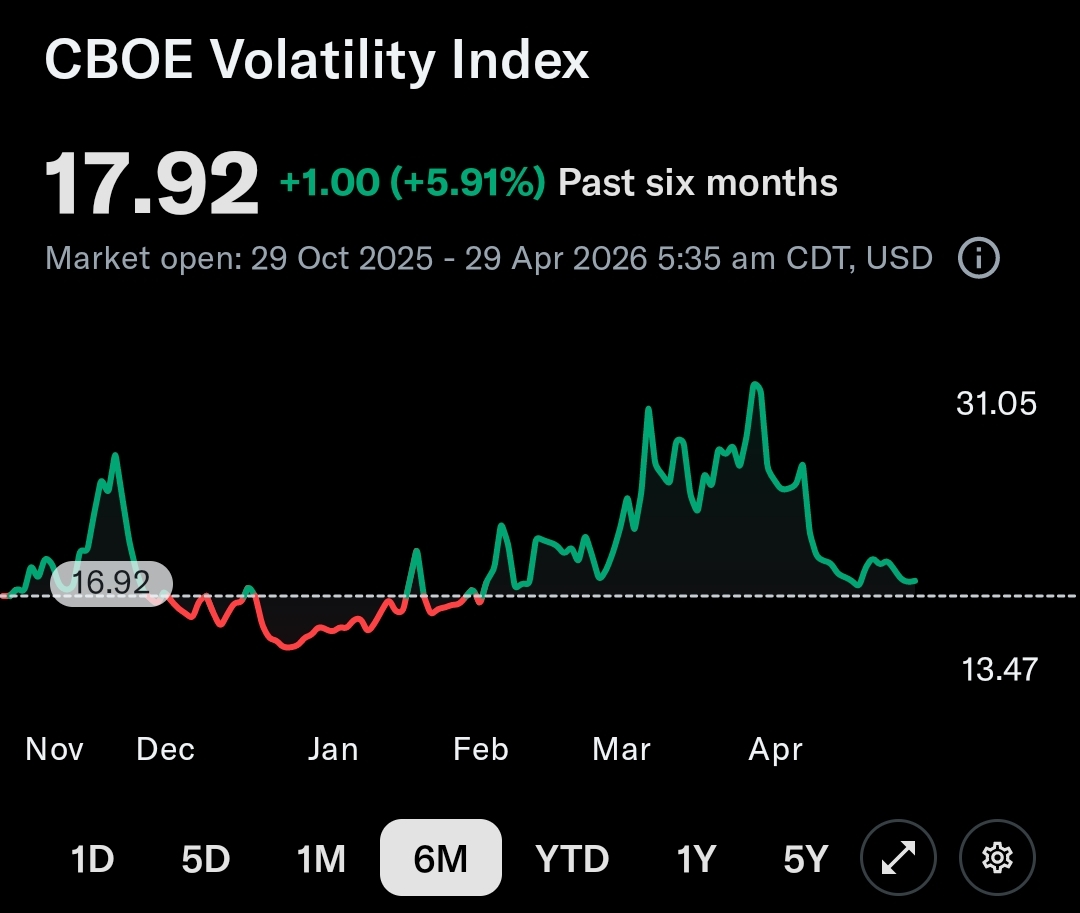
*Yahoo Finance
What Matters More Than the Index Move
Beneath the relatively calm price action, several important shifts are underway: Technology and momentum names weakened noticeably. Semiconductors showed clear signs of exhaustion. Energy outperformed. Defensive sectors held up better. More significantly: CTAs are no longer providing tailwinds. AI-related spending concerns are surfacing. Rates are quietly creeping higher. Geopolitical tensions continue to support energy prices. These aren’t isolated events — they’re connected signals of gradually tightening conditions. While the dominant narratives remain supportive, momentum is rolling over. Major indices are forming lower highs with thinning participation — classic early signs that market structure may be deteriorating even as the story stays intact. This is not a panic signal. It’s an early warning. And those are often the most valuable.
The Three Forces Converging Right Now
1. Energy Is Regaining Control.
Geopolitical risks are no longer background noise. Ongoing tensions involving Iran, potential disruptions in the Strait of Hormuz, firm oil prices despite broader market softness, and early signs of OPEC fragmentation all point in the same direction. Energy sits upstream of the entire economy. When it rises, the transmission flows through inflation, yields, liquidity, and ultimately risk assets. That transmission mechanism is tightening again.
2. The AI Narrative Is Showing Cracks
For months, AI optimism has been the glue holding valuations together. But cracks are appearing: revenue misses in key names, rising scrutiny on massive capex plans, fading semiconductor momentum, and increasingly crowded positioning. The narrative isn’t broken, but it’s no longer bulletproof. Markets don’t always need stories to collapse — they often stumble when those stories simply stop improving.
3. Market Structure Is Quietly Weakening
This may be the most critical development. Systematic buyers are stepping back. Momentum is unwinding. Bond demand is softening. Market internals are diverging from headline index performance. In short: the surface looks orderly, but risk is building underneath. This is how distribution phases often begin — not with panic selling, but with quietly less buying.
Why This Moment Matters
We are not in a breakdown. We are in a transition. Strong narratives. Still-supported prices. But weakening underlying structure. This divergence is what inflection points look like. History shows that when story and structure start telling different stories, the market eventually follows the structure.
What to Watch in the Coming Days
If the current trend persists, the likely progression is:
> Energy prices continue grinding higher.
> Yields move up on renewed inflation pressure.
> Liquidity conditions tighten further.
> High-beta and AI-related names lead the downside.
> Broader indices follow.
Not necessarily all at once, but in that general sequence.
Final Take
The market hasn’t broken yet, but the balance is clearly shifting. When narrative strength and structural weakness diverge, disciplined investors pay close attention. Some build walls. Some build windmills. At true inflection points, the edge belongs to those who quietly prepare for both — protecting capital while positioning for the shift that follows. I’d love to hear your perspective. Are you seeing the same structural shifts in your analysis? Drop a comment below or reach out — I read every response. Stay sharp, and I’ll be back with the next update.