The Weekly Lens | November 7, 2026
On Wednesday, Wall Street celebrated a change in Washington. By Thursday, technology stocks were suffering one of their sharpest sell-offs in years. And on Friday, an unexpectedly strong American jobs report gave investors yet another reason to worry about interest rates.
Meanwhile, thousands of miles away, tankers were encountering trouble in the Strait of Hormuz while diplomats continued trying to negotiate an end to the war with Iran.
For investors, it was a week of sharply conflicting messages.
A change in political power promised a different direction for American policy. Falling oil prices offered some relief from inflation. But the extraordinary spending behind the artificial intelligence boom was looking increasingly vulnerable, and the Federal Reserve had little reason to relax.
The question is no longer simply whether the economy can withstand higher interest rates.
It is whether markets have become too dependent on everything going right at once.
Washington: The Election Changed More Than Congress
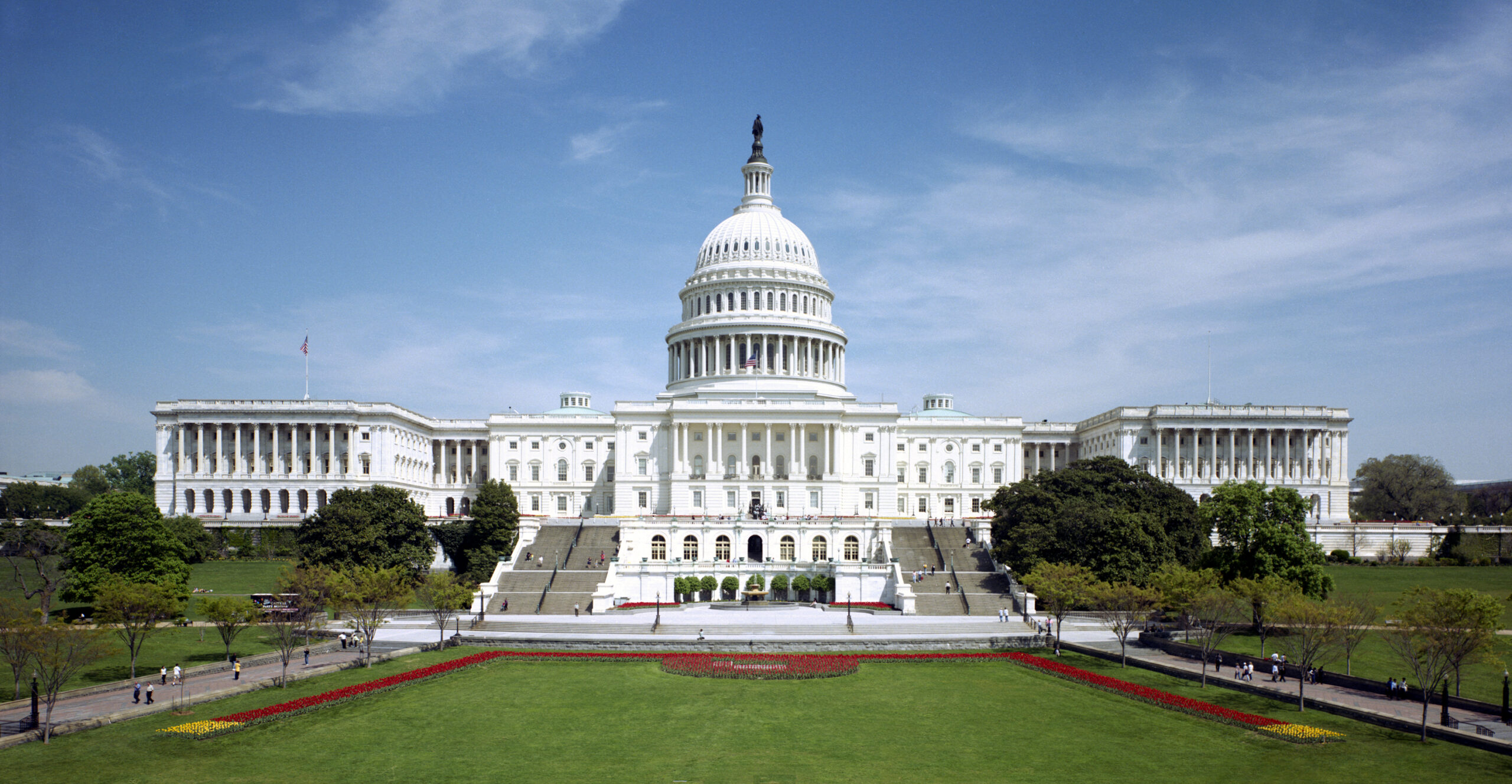
The American midterm elections delivered a decisive change in the political balance of power.
Democrats secured control of both houses of Congress, dealing President Donald Trump a substantial political setback.
Markets initially welcomed the result.
On Wednesday, the Dow Jones Industrial Average surged more than 3%, its strongest single-day gain since April 2025.
But the implications of the election are more complicated than a one-day rally.
A divided government makes it harder for a president to pass legislation without negotiation. Federal spending, taxation, trade measures and regulatory appointments now face a different political environment.
For financial markets, gridlock can sometimes appear reassuring. It may limit unexpected legislation or large increases in spending.
But gridlock also creates uncertainty.
Congress still has to agree on government funding. The administration must negotiate with political opponents. And foreign governments have to reconsider how much freedom Washington retains to pursue its existing policies.
Perhaps the most consequential question concerns the war with Iran.
The election demonstrated that military commitments abroad can have political consequences at home. Vice President JD Vance himself linked Republican losses to the conflict.
A president confronting a less cooperative Congress may have a stronger incentive to seek a diplomatic settlement. Equally, political disagreements over the war could complicate any agreement that requires sustained American involvement.
Neither outcome is guaranteed.
Why it matters: Washington’s new political balance changes the conditions under which American economic and foreign policy will be made. Markets may welcome limits on government power, but they still depend on governments being able to make decisions.
And nowhere is that distinction more important than in the Middle East.
Iran: The Price of Peace Is Still Being Negotiated at Sea

The diplomats continued talking this week.
Iranian and American representatives remained engaged through Qatari mediation, although negotiations had not produced a decisive breakthrough.
At the same time, the Strait of Hormuz was delivering a rather different message.
By Thursday, maritime authorities had received reports of at least five incidents involving commercial vessels since the beginning of November.
The contrast is becoming familiar.
Peace is discussed in conference rooms while the cost of conflict is measured on shipping routes.
But there is an interesting development beneath the surface.
Iran has indicated that vessels associated with selected countries, including China, India, Qatar and Iraq, may receive more favourable passage arrangements.
That raises a question extending beyond the immediate conflict.
What happens when access to one of the world’s most important waterways becomes a matter of political relationships rather than dependable international commerce?
For decades, the global economy has benefited from the assumption that major trade routes remain broadly accessible.
Shipping companies, commodity traders and industrial businesses organise their operations around that assumption.
If access becomes selective, commercial decisions begin to acquire a geopolitical dimension.
A refinery may no longer be concerned only with the price of crude oil. It may also have to consider which supplier, vessel or trading relationship offers the greatest certainty of delivery.
Meanwhile, oil prices moved sharply lower during the week as investors considered the possibility of diplomatic progress.
That is an important development, but cheaper oil does not necessarily mean that the underlying security problem has disappeared.
There is a difference between a market anticipating peace and the conditions required to make peace durable.
Why it matters: The Strait of Hormuz is becoming a test of whether international energy trade can return to predictable commercial rules or remains subject to the political calculations of governments involved in the conflict.
The market price of oil can change in an afternoon. Rebuilding confidence in a shipping route takes considerably longer.
Wall Street: The AI Boom Discovers Its Political Problem

For much of the past two years, artificial intelligence has been treated as an economic opportunity of extraordinary proportions.
Technology companies have committed vast sums to data centres, chips, power generation and computing infrastructure.
Investors have largely accepted the argument that the investment is necessary because future demand will justify today’s spending.
This week, that confidence encountered another test.
The change in Congress raised questions about the future regulation and taxation of artificial intelligence, while investors were already becoming more sensitive to high valuations, financing arrangements and capital expenditure.
Thursday’s sell-off was severe.
Semiconductor shares suffered an exceptionally sharp decline, and the weakness spread across the broader technology sector.
Friday brought a recovery, but it was not enough to erase the week’s losses.
The Nasdaq finished its fourth consecutive declining week.
It is tempting to explain the selling entirely through the election.
That would be too simple.
The underlying problem existed before Americans voted.
AI infrastructure requires enormous amounts of capital today, while the full financial benefits may arrive years into the future.
This creates two risks.
The first is commercial: will companies generate sufficient revenue and profits to justify the investments?
The second is financial: what happens when borrowing becomes more expensive, investors become less patient and the political environment changes?
A technology can transform society without rewarding every company that finances its development.
Railways changed the nineteenth-century economy. The internet transformed commerce and communication. Neither development prevented investors from losing enormous sums along the way.
The same distinction matters for artificial intelligence.
The commercial possibilities may be extraordinary. But extraordinary possibilities are not the same thing as guaranteed investment returns.
And the week’s economic data introduced yet another complication.
American employers added 165,000 jobs in October, more than expected. That encouraged investors to consider the possibility that interest rates would need to remain restrictive.
A strong labour market sounds like good news.
For companies whose valuations depend heavily on future earnings, it can also mean the cost of capital remains uncomfortably high.
Why it matters: The AI boom is being tested simultaneously by its economics, its financing requirements and its political environment. The question is not whether the technology has a future. It is how much investors should pay for that future today.
How Global Markets Responded
For all the excitement surrounding the election, American equities finished the week lower.
The Dow’s Wednesday rally did not survive the subsequent technology sell-off intact.
The Nasdaq experienced the greatest pressure among the major American indices, while the broader S&P 500 also lost ground.
Small-company shares declined, and semiconductor stocks experienced a particularly difficult week.
Oil prices, however, moved sharply lower, reflecting changing expectations about the conflict with Iran.
Bond yields also declined over the week, even as Friday’s stronger employment report raised questions about how much further the Federal Reserve might tighten policy.
The important lesson is that different markets were responding to different parts of the same economic picture.
Falling oil prices offered potential inflation relief. Strong employment complicated monetary policy. Political change raised questions about regulation and spending. And expensive technology shares remained exposed to disappointed expectations.
The Market Dashboard
October 30 to November 6, 2026
| Indicator | Oct 30 | Nov 6 | Change |
|---|---|---|---|
| S&P 500 | 7,580.07 | 7,376.86 | −2.68% |
| Nasdaq Composite | 25,437.00 | 24,579.43 | −3.37% |
| Dow Jones | 51,770.31 | 51,285.73 | −0.94% |
| Russell 2000 | 2,811.84 | 2,754.11 | −2.05% |
| US 10-year yield | 4.929% | 4.859% | −7 bp |
| WTI crude (Dec. futures) | $104.12 | $90.83 | −12.76% |
| Brent crude (Jan. futures) | $113.43 | $98.32 | −13.32% |
| VIX | 19.42 | 25.64 | +6.22 pts |
The most striking feature of the dashboard is the combination of falling equities, cheaper oil and elevated market volatility.
That is not the picture of a market responding to one isolated problem.
It is a market attempting to reassess several important assumptions simultaneously.
What to Watch Next Week
Three developments deserve particular attention.
First, Washington’s new political reality. Watch how the administration responds to the congressional election result, particularly on government funding, AI regulation and the conflict with Iran. The difference between campaign promises and workable legislation will soon become clearer.
Second, diplomacy and commercial shipping. Negotiations involving Iran remain important, but actual conditions in the Strait of Hormuz will provide a more immediate test of progress. Shipping incidents, vessel access and insurance costs matter at least as much as diplomatic statements.
Third, American inflation. The coming inflation figures will test whether cheaper energy is beginning to ease price pressures elsewhere in the economy. If inflation remains persistent despite falling oil prices, the Federal Reserve’s position becomes more difficult.
And investors will continue asking whether the rebound in technology shares represents renewed confidence or merely a temporary recovery after heavy selling.
The Lens
There is a curious contradiction running through the global economy.
Governments want growth, but political conflict makes investment more uncertain.
Businesses want cheaper financing, but inflation prevents central banks from providing it freely.
Investors want the extraordinary profits promised by artificial intelligence, but they are becoming less willing to finance the extraordinary costs required to produce them.
This week added another complication.
The American electorate changed the political balance in Washington, just as the global economy was already struggling with war, expensive energy and uncertainty about the next stage of technological investment.
Perhaps the most important lesson is that markets do not operate separately from politics.
They operate within the conditions politics creates.
Governments decide the rules. Conflicts influence the movement of goods. Central banks influence the price of money. And investors must decide what businesses are worth within those constraints.
The election changed who holds political power in Washington.
It did not make those economic realities disappear.
Markets move fast. We slow them down.
The Impartial Lens — Independent perspective on markets, politics and the forces shaping our world.
The Impartial Lens is for information and education only, not investment advice.