
The Weekly Lens:
On Monday, Wall Street bought the future it wanted. Oil fell, yields eased, and the Nasdaq surged. By Wednesday, Treasury buyers wanted a higher return, small caps were tumbling, and Washington was arguing over how to bring diesel prices down. On Friday, falling crude gave stocks another lift. The long bond still refused to relax.
This was the week’s lesson: a cheaper barrel is not the same as a cheaper energy system. And neither guarantees cheaper money.
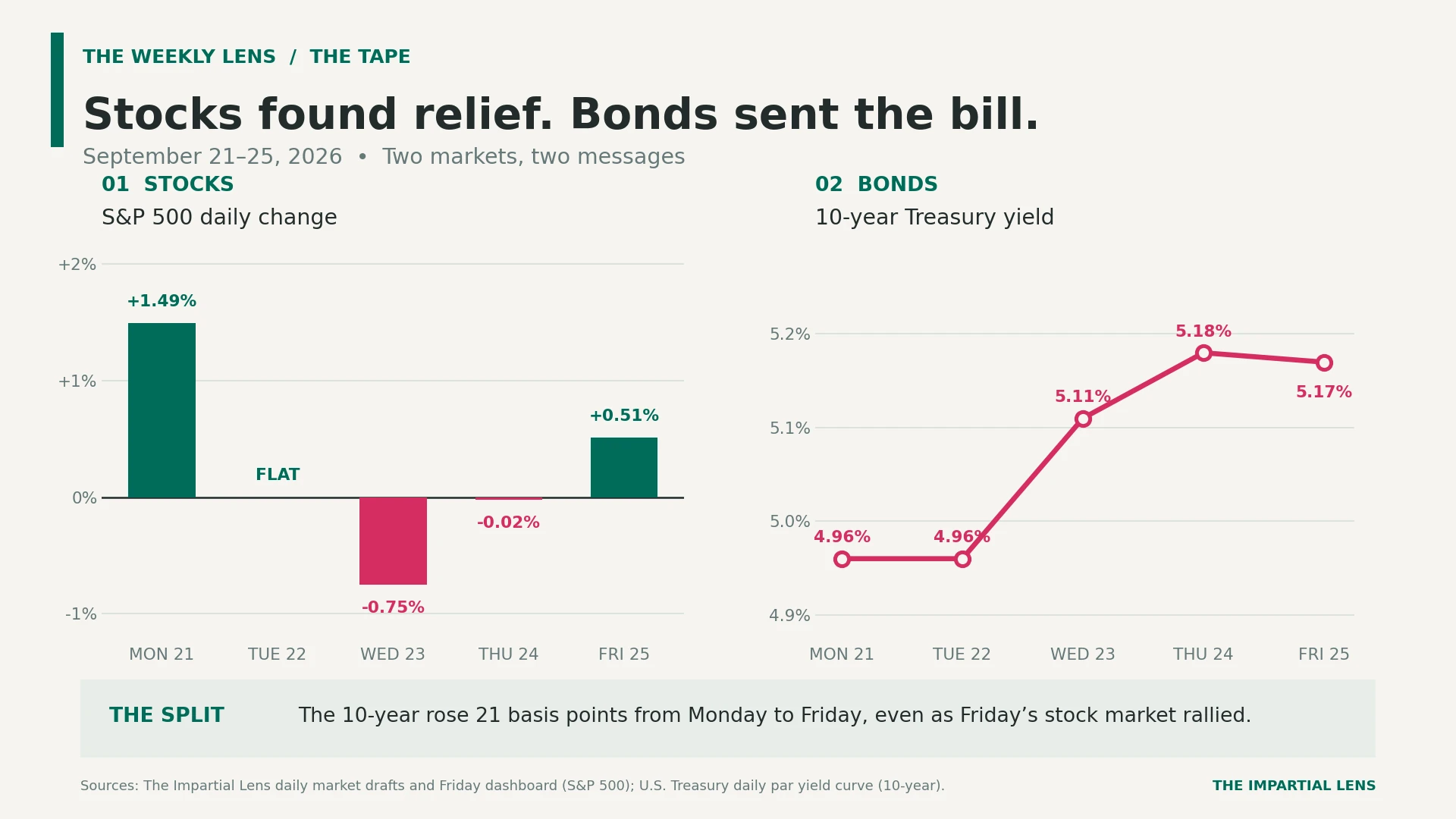
The S&P 500 rose 1.49% on Monday, with the Nasdaq up 2.26%. Wednesday reversed the mood: the S&P fell 0.75%, the Russell 2000 lost 1.77%, and ten of eleven major US sectors declined. Friday’s S&P gain of 0.51% and Dow gain of 0.93% showed that buyers had not disappeared. But the week was less a verdict of confidence than a contest between two clocks. Financial markets could price a diplomatic opening in minutes. Tankers, refineries, power grids and Treasury auctions moved on their own schedules.
The barrel heard the peace talk
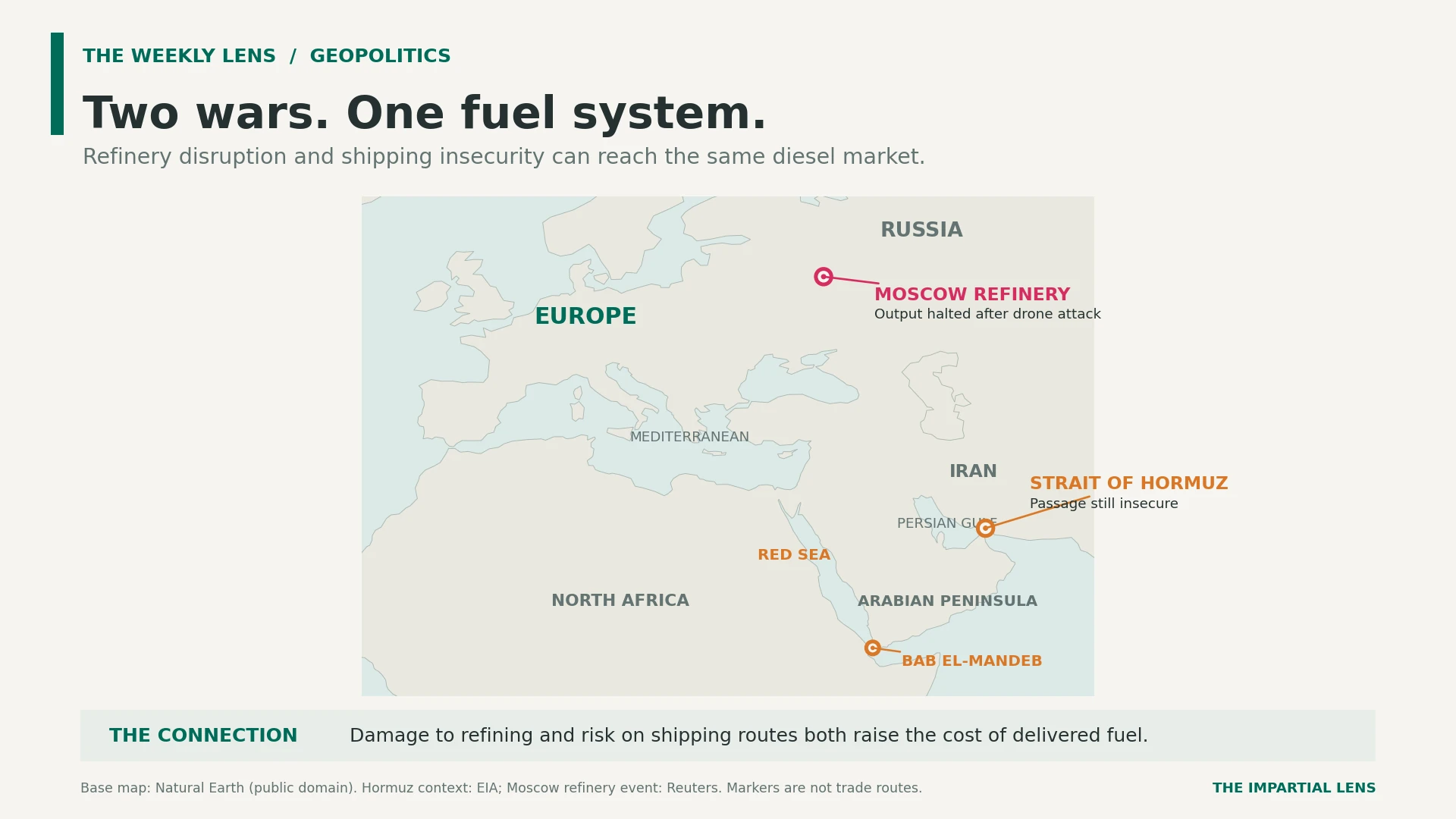
Iran said it could reopen the Strait of Hormuz within a week if the US eased military pressure and lifted its blockade on Iranian ports. That was a conditional offer, not a reopened waterway. Washington’s response offered no settled agreement. Oil nevertheless fell on the prospect that the worst disruption might ease.
On Friday, our closing dashboard put WTI at $92.44 and Brent at $97.47, both down more than 2% on the day. Lower crude helped consumers in the market’s imagination, reduced immediate inflation fears, and permitted equities to rise. The VIX closed below 15.
There was a rational basis for relief. But the price of a futures contract cannot escort a tanker. Hormuz remains one of the world’s essential oil transit chokepoints. Producers can improvise routes, transfer cargoes and offer discounts to keep oil moving. Each workaround takes ships, insurance, time and money. A barrel that arrives late and expensively is not equivalent to one moving freely through a secure strait.
This distinction has run through our coverage of the world’s arteries. Production is only the first part of supply. Refining, delivery and access decide what households and businesses actually pay.
Diesel connected two wars
Diesel made the physical problem harder to ignore. It moves freight, farm equipment and construction machinery. When its price rises, the cost does not stay at the pump. It travels into food, transport, and the price of building almost anything.
The war around Iran has disrupted Gulf routes and export capacity. At the same time, Ukrainian attacks have damaged Russian refineries. The Moscow refinery halted processing after a drone attack, according to Reuters’ industry sources. A refinery strike can weaken Russia’s war economy while also removing fuel from a tight international market. Those two effects can be true at once.
Washington faced the political consequence as US diesel prices reached record highs. A report that the administration was preparing a temporary diesel export ban moved futures prices on Wednesday. The White House denied that a flat ban was being considered, while Energy Secretary Chris Wright warned that it could reduce refinery output and raise prices for other fuels. That denial matters: the policy was not adopted. The episode still showed how a fuel bottleneck can become an inflation and political problem even when crude is falling.
For Europe, the squeeze is particularly awkward. Russian refining disruptions and insecurity on Middle Eastern routes affect different parts of its replacement supply. Governments can rearrange flows, but rerouting fuel is neither instant nor free.
One war threatens a shipping artery. The other damages refining capacity. The pump records both.
The buyer problem moved from fuel to bonds
The Treasury’s official closing series shows the 10-year yield at 4.96% on Monday and 5.17% on Friday. The 30-year climbed from 5.29% to 5.49%. That is a rise of 21 and 20 basis points, respectively, during a week that ended with oil falling and equities rallying.
The midweek auctions sharpened the question. Buyers did not disappear; they demanded more compensation. That is how the bond market sends a bill. Stronger business data and inflation uncertainty complicated hopes for easier policy, while a large government financing need met investors who could insist on a higher yield.
The Federal Reserve can set its overnight rate. It cannot order investors to lend for thirty years at yesterday’s price. If the required return rises, the effects spread well beyond Washington: mortgages cost more, corporate projects face tougher arithmetic, and future earnings are discounted more heavily.
Friday’s market showed the split. Nine of eleven sectors rose, with technology and industrials among the leaders. Yet the Russell 2000 gained only 0.07% while the Dow rose 0.93%. Large companies with cash and easy access to capital could enjoy the relief. Smaller borrowers had less room to ignore a 10-year yield above 5%.
That is why the headline index cannot tell the whole story. A rally can be real, and the financing environment can be getting harder at the same time.
The market can price a decade of AI growth today. Companies still have to build it in the physical world.
AI cannot outrun the grid
There was another version of the same constraint in technology. AI enthusiasm supported major shares, but the promised capacity must be built somewhere. Data centers need electricity, land, permits, cooling equipment, transformers, and financing. The International Energy Agency has identified energy infrastructure as one of the limits on how quickly that expansion can happen.
This week supplied a concrete reminder. Oracle issued a force majeure notice connected to possible power delays at its New Mexico data-center project, according to Reuters’ source. That does not prove the AI boom is failing. It shows that announcing computing capacity and energizing it are separate jobs.
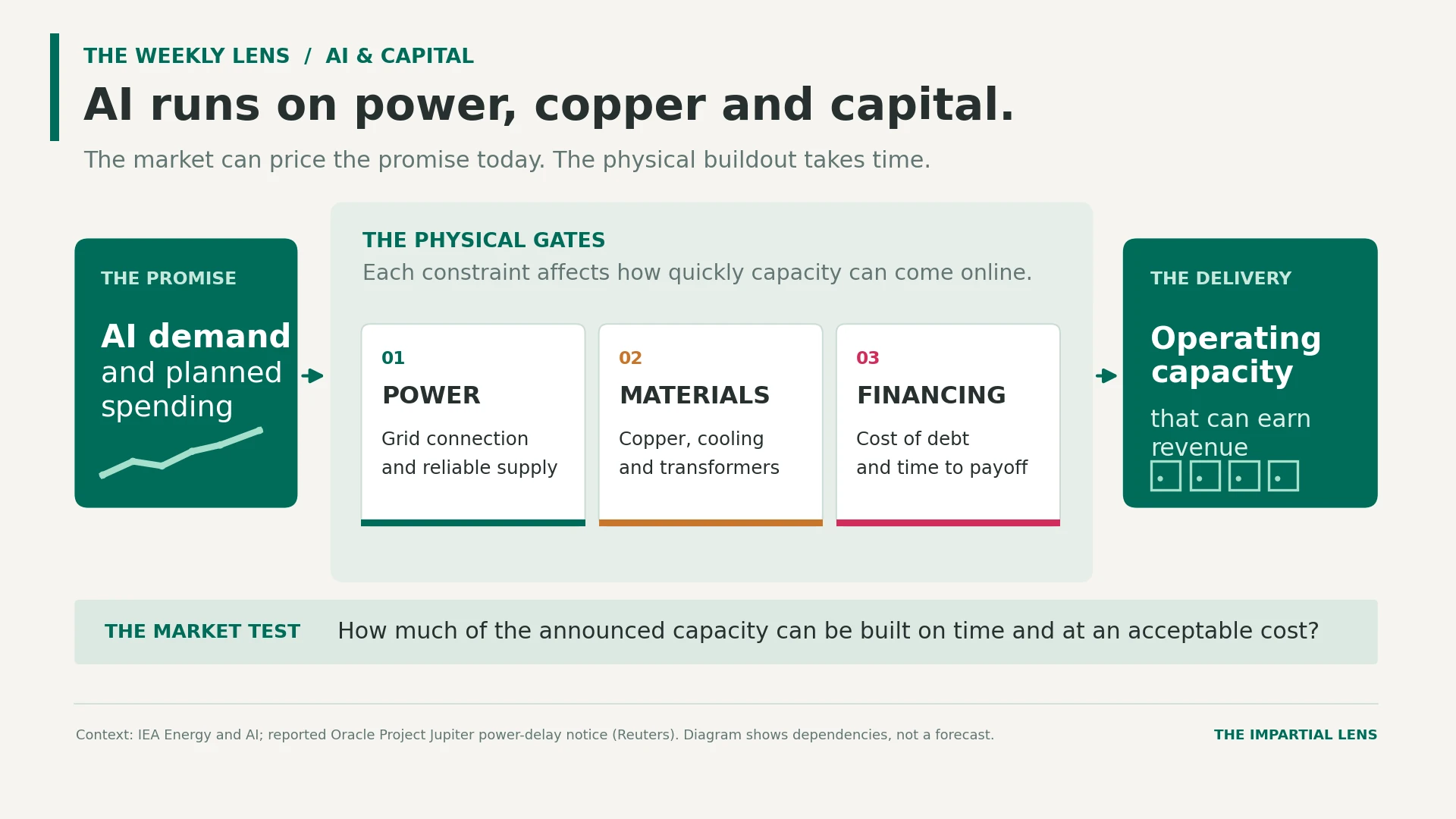
Tuesday’s strength in basic materials and copper carried a related message. Investors were looking at the inputs needed for grids, data centers, and strategic industry. The IEA’s critical-minerals outlook describes concentrated supply and the time needed to develop new capacity. Copper demand, power access and the cost of debt all meet in the same construction schedule.
The market can price a decade of AI growth today. Companies must build it in the physical world and finance the interval before it pays.
What we will watch
The long end. Does the 10-year hold above 5%, and does the 30-year keep rising? The reception of new Treasury supply matters as much as the next Fed speech.
The fuel actually delivered. Watch diesel, refining availability, freight and insurance alongside Brent. A lower crude quote is only partial relief if getting usable fuel to the customer remains expensive.
Hormuz beyond the headline. A proposal matters. Sustained vessel passage and reliable exports would tell us more than another day of optimistic talk.
The shape of the rally. If the Nasdaq advances while smaller companies and rate-sensitive sectors lag, the market is still drawing a line between those who can finance growth and those who must borrow to survive.
Friday ended with cheaper oil, higher stocks and a calm volatility index. Those are facts worth respecting. So is the bond market’s response.
Wall Street bought relief. The people financing the future asked who pays for it.
The Impartial Lens provides market commentary and education only. This is not investment advice.