A week ago, Wall Street was celebrating a recovery. By Friday afternoon, investors were trying to remember where they had parked the lifeboats.
The Nasdaq lost 10% in five trading sessions. The S&P 500 fell 8.6%. Japan and Europe joined the retreat, while gold and Bitcoin offered little protection.
The immediate trouble came from artificial intelligence, an industry that has attracted extraordinary sums of money and even more extraordinary expectations.
But this was bigger than a few technology shares having a bad week. It exposed how tightly financial markets around the world are now connected, why even apparently safe investments can fall in a panic, and how quickly enthusiasm can turn into a rather expensive education.
The AI Boom Has a Price. Investors Are Reconsidering It.
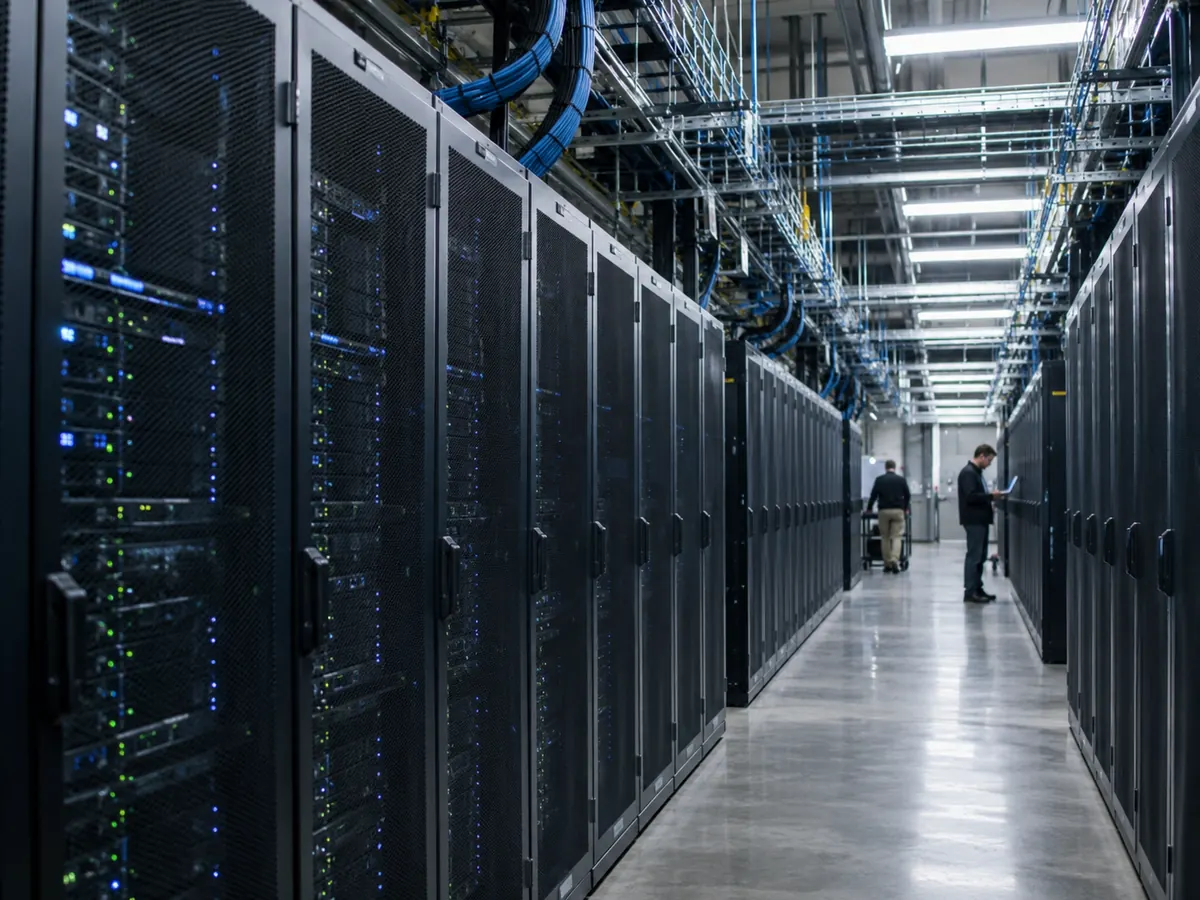
For much of the past several years, artificial intelligence has been an excellent story to tell investors. Companies need powerful computers. Those computers need Nvidia chips. The chips need data centers, electricity and enormous amounts of capital. And if AI transforms business as its supporters expect, the companies supplying all that equipment could make fortunes.
The difficulty is deciding how much those future fortunes are worth today. This week, investors became considerably less enthusiastic about the answer.
Nvidia lost almost 23% of its market value during the week. Friday’s decline followed reports that American securities regulators were examining aspects of the company’s accounting. An investigation does not establish wrongdoing. But uncertainty is particularly unwelcome when a company’s valuation already assumes years of remarkable growth.
Then came Anthropic. The company behind Claude completed a record-breaking stock-market flotation on Thursday, selling shares at $83. Initial trading began at $111.50. By Friday’s close, those shares were worth $88.91.
Someone who received shares at the original offering price was still ahead. Someone who bought at the opening trade had lost roughly 20% in two days. Same company. Same technology. Very different investment experience.
Artificial intelligence could become as important as electricity or the internet. That does not mean every company involved deserves an unlimited price tag. When investors pay for decades of expected success in advance, even excellent businesses can disappoint them. And once confidence begins to weaken, the selling does not necessarily stop with the companies that started it.
An American Sell-Off Becomes Everyone’s Problem

If you own shares in a Japanese semiconductor manufacturer, an American technology sell-off might seem rather distant. It isn’t.
The AI industry crosses borders at almost every stage. American companies design chips and operate cloud services. Taiwan manufactures advanced semiconductors. South Korean companies produce critical memory. Japan supplies specialised equipment and materials. Many European businesses provide industrial machinery, components and infrastructure.
These are not separate industries politely doing business with one another. They are parts of the same production system. When investors begin questioning how much American technology companies will spend, they also reconsider the prospects of suppliers thousands of miles away.
On Friday, Japan’s Nikkei fell more than 5%. South Korea’s KOSPI suffered a similar decline. European markets also retreated.
Not every company in those countries depends on artificial intelligence, of course. But global investment funds own shares across many markets. When those funds reduce risk, selling can spread well beyond the original source of concern.
There is another complication. A sharp fall in share prices can make investors feel poorer, even if their income has not changed. That can affect spending, particularly among households with substantial investments. Businesses may become more cautious about expansion, and pension funds can see the value of their holdings decline.
None of this means a stock-market correction automatically produces a recession. But it explains why a sell-off that begins with expensive American technology shares can eventually matter to businesses and households far beyond Silicon Valley.
It also raises a question worth considering: if so much investment across Asia, Europe and America depends on continued spending by a relatively small number of technology companies, how diversified is the global economy really?
Gold, Bitcoin and the Search for Somewhere Safe

When markets fall sharply, investors usually start looking for safety. This week, that search produced some uncomfortable surprises.
Gold fell. Bitcoin fell even harder. Yet American government bonds attracted buyers, pushing Treasury yields lower.
Why?
First, a reminder about bonds. When investors buy existing bonds, their prices generally rise and their yields fall. The US 10-year Treasury yield declined from 5.15% to 4.92% during the week. That suggested demand for the relative security and predictable payments of American government debt.
But why sell gold, traditionally regarded as a safe haven? Because investors do not always sell what they dislike. Sometimes they sell what they can.
Imagine an investment fund suffering heavy losses in technology shares. It may need cash to repay borrowing, meet collateral requirements or reduce its overall exposure. Gold can be sold quickly. So can Bitcoin. And when many investors try to raise money at the same time, selling can feed on itself.
That does not settle whether gold is a useful long-term store of value or whether Bitcoin has a future in the financial system. It does demonstrate that an investment’s reputation is not a guarantee of what its price will do next Tuesday.
Gold, Bitcoin and government bonds have different characteristics, different risks and different reasons for being owned. Treating them as interchangeable protection against every financial shock is asking rather a lot. This week, investors were reminded of that distinction at considerable expense.
How Markets Responded
The scale of the reversal is easier to understand when we compare Friday’s closing figures with the previous week.
Weekly Market Comparison
November 13–20, 2026
| Market | Nov 13 | Nov 20 | Change |
|---|---|---|---|
| United States | |||
| S&P 500 | 7,561.67 | 6,910.39 | −8.61% |
| Nasdaq Composite | 25,136.27 | 22,617.73 | −10.02% |
| Dow Jones | 52,347.55 | 48,147.33 | −8.02% |
| Europe | |||
| FTSE 100 | 10,902.56 | 10,346.33 | −5.10% |
| DAX | 26,749.95 | 24,802.78 | −7.28% |
| CAC 40 | 8,368.91 | 7,927.75 | −5.27% |
| Asia | |||
| Nikkei 225 | 61,142.35 | 56,436.65 | −7.70% |
| Hang Seng | 23,637.60 | 22,410.80 | −5.19% |
| Bonds | |||
| US 10-year yield | 5.15% | 4.92% | −23 bp |
| US 30-year yield | 5.47% | 5.31% | −16 bp |
| Gold & Bitcoin | |||
| Gold (USD/oz, indicative) | $3,874.47 | $3,520.57 | −9.14% |
| Bitcoin (USD, indicative) | $68,249.27 | $58,798.98 | −13.85% |
The most revealing development wasn’t simply that American stocks fell.
It was the breadth of the selling.
Technology shares suffered particularly heavy losses, but the retreat reached other industries and financial markets around the world.
Treasury yields moved lower, reversing much of the increase that concerned us in last week’s edition.
What We’re Watching Next Week
Wall Street: Will buyers return to technology shares, or will selling spread further into the broader market?
AI investment: Are companies changing their spending plans, or are investors simply reducing the prices they’re willing to pay?
Government bonds: Will demand for safety keep Treasury yields lower, despite continuing concerns about American borrowing?
International markets: Will Asian and European shares begin moving independently, or continue following Wall Street’s lead?
The Lens
There is something peculiar about financial markets. A company can have a perfectly good product, growing sales and a promising future. Its shares can still be a terrible investment if the buyer pays too much. And a company can disappoint investors without its business suddenly becoming worthless.
The difference is price. This week, investors rediscovered that distinction.
Artificial intelligence has not disappeared. Neither have the computers, factories or people building it. What changed was how much investors were willing to pay for the future they imagined.
Whether Friday marked the end of the selling or merely another stage remains to be seen. But the lesson is not complicated. A remarkable invention is one thing. A remarkable investment is another. And confusing the two can be very expensive.
Markets move fast. We slow them down.
The Impartial Lens provides market commentary and education only, not investment advice.