The Weekly Lens | October 31, 2026
There is something rather unsettling about a world in which diplomats cannot agree to stand together for a photograph, tankers are attacked while peace negotiations continue, and Wall Street suddenly begins questioning the extraordinary sums being spent on artificial intelligence.
The political arrangements that have supported international trade are under strain. Energy remains vulnerable to military conflict. And the cost of money is becoming harder to ignore.
For much of the past decade, investors could assume that central banks would eventually come to the rescue. That assumption is looking increasingly expensive.
This week’s developments deserve a closer examination.
Iran: Peace Talks on Land, Explosives at Sea
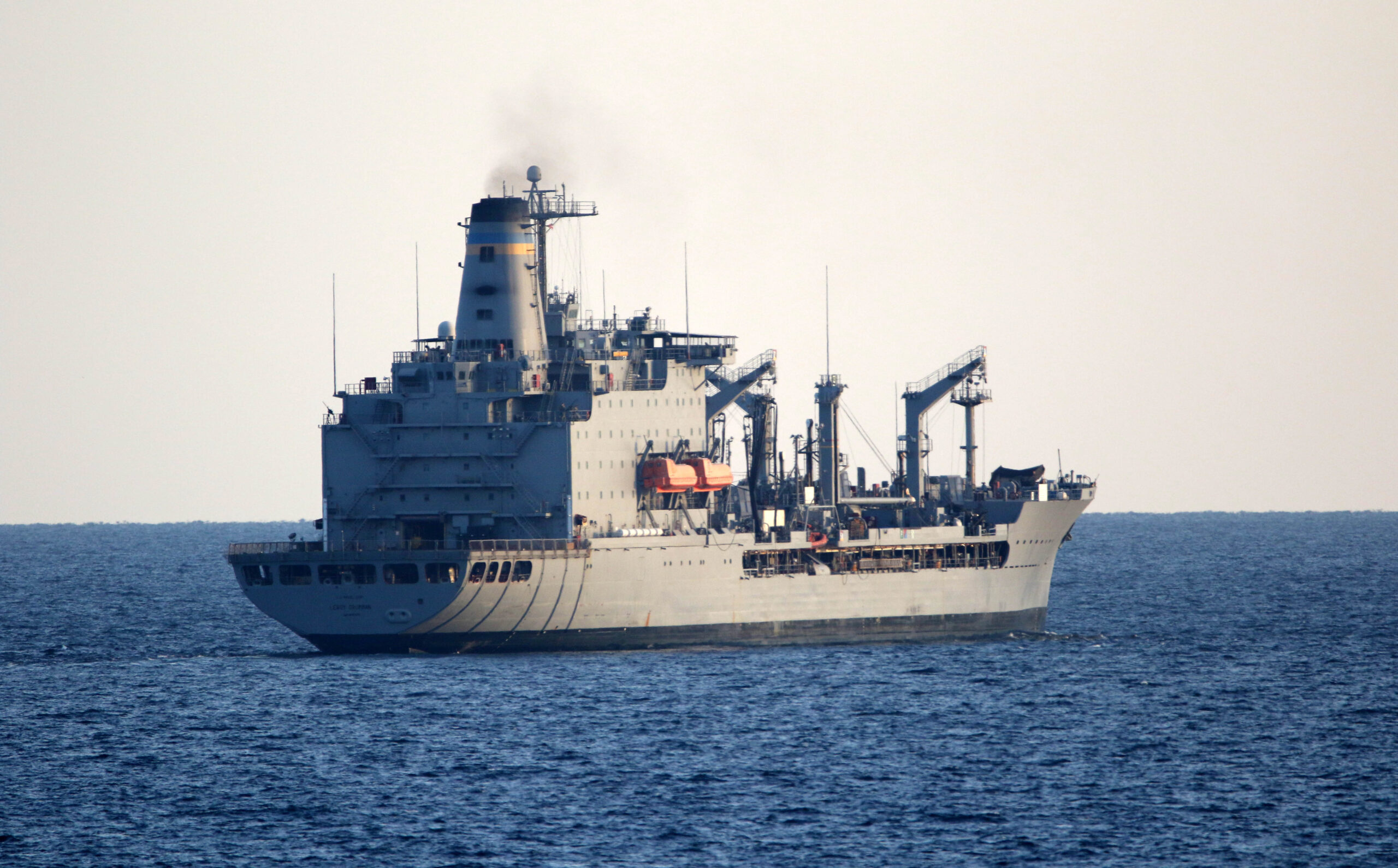
Qatari mediators returned to Tehran on Friday in another attempt to end the war between Iran, Israel and the United States.
The problem is that diplomacy and events on the water are telling rather different stories.
A tanker travelling through the Strait of Hormuz was reportedly attacked with explosives attached to its hull. Meanwhile, Iran made separate claims about vessels using routes it had not authorised.
The significance goes well beyond the ships themselves.
The Strait of Hormuz is one of the world’s most consequential energy corridors. When commercial vessels cannot move safely, the consequences ripple through shipping insurance, freight costs, oil prices and, eventually, consumer inflation.
A ceasefire announcement would be welcome. But restoring confidence in commercial shipping requires more than signatures on a diplomatic agreement.
Shipowners and insurers need to believe the route is genuinely safe.
Why it matters: The difference between oil being available and oil being deliverable is becoming a central economic question.
That is a distinction worth remembering whenever markets react enthusiastically to the next diplomatic breakthrough.
The G20: The Family Cannot Agree on a Photograph
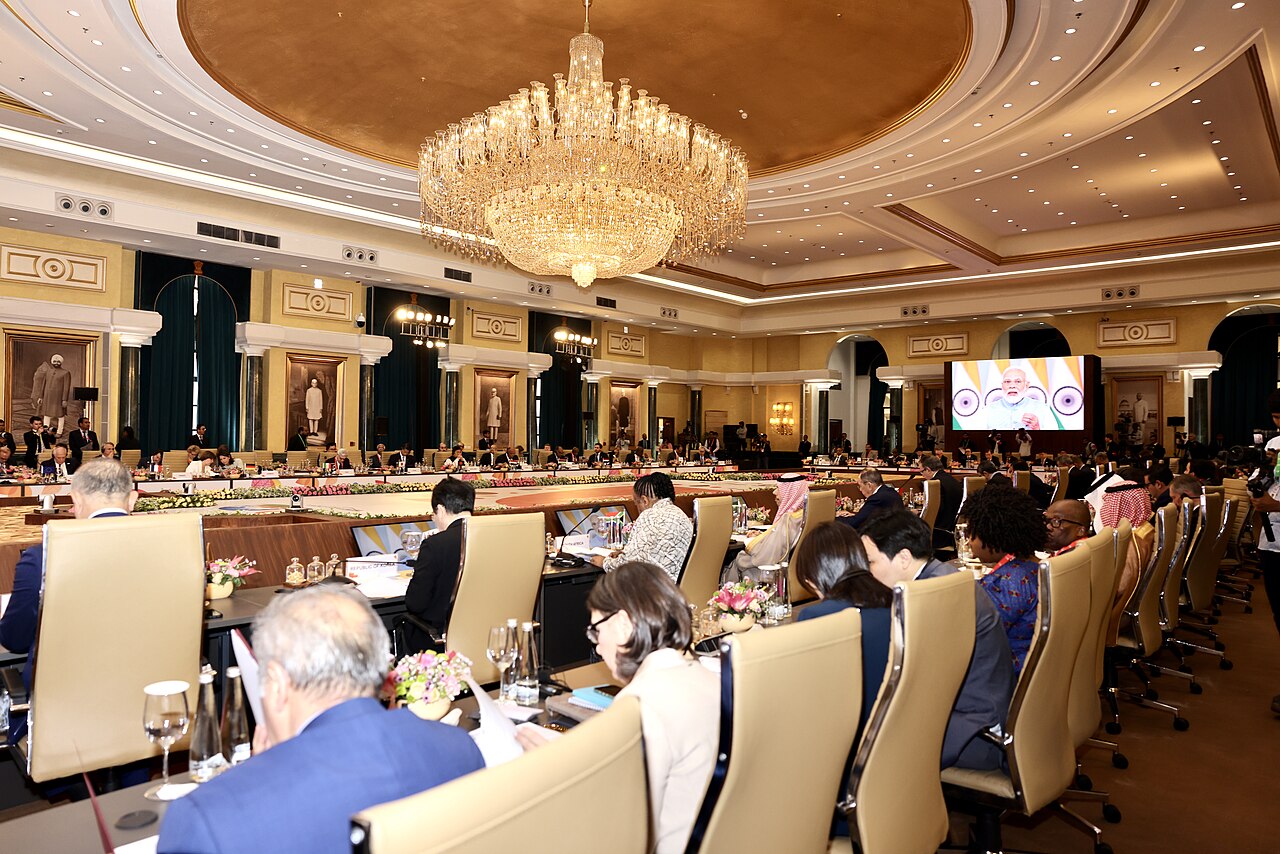
In Atlanta on Friday, foreign ministers gathered for a G20 meeting intended to address some of the world’s most difficult economic and diplomatic challenges.
They could not agree on the traditional group photograph.
European representatives objected to appearing alongside Russia’s foreign minister, Sergei Lavrov. The photograph was cancelled.
On one level, this might sound like a minor diplomatic embarrassment.
It is not.
The G20 brings together countries whose combined economic influence shapes global finance, trade, energy and development. Its effectiveness rests partly on governments maintaining channels of cooperation despite disagreements.
Russia’s war in Ukraine has fractured that cooperation. The conflict involving Iran has added another layer of tension. Arguments over tariffs, China and freedom of navigation are complicating matters further.
Poland’s position is especially interesting.
As a strategically important European economy bordering Ukraine, Poland sits close to the intersection of European security, defence spending and the economic consequences of the war. Russia’s opposition to Polish membership of the G20 illustrates how geopolitical rivalries increasingly spill into institutions designed for economic cooperation.
The immediate consequences are not necessarily visible in an equity index.
They appear over time in defence budgets, supply-chain decisions, energy policy and the willingness of governments to cooperate during crises.
Why it matters: International economic coordination becomes harder precisely when global risks make it more necessary.
And when cooperation weakens, the costs rarely remain confined to diplomacy.
Poland may be about to test the foundations of the European project.
Poland’s opposition has raised the possibility of threatening EU withdrawal to force fundamental changes to the balance of power between Brussels and national governments.
That is no small matter. Poland is one of the EU’s largest members, a strategically important NATO country and a central player in European security.
The question now is how Brussels responds.
Will European leaders offer concessions and a serious discussion about sovereignty and reform? Or will they take a harder line, relying on political pressure and the EU’s legal and financial powers?
There is also a third possibility: that Brussels chooses to avoid escalating a dispute already dividing Polish politics.
Wall Street: The AI Boom Meets an Uncomfortable Question
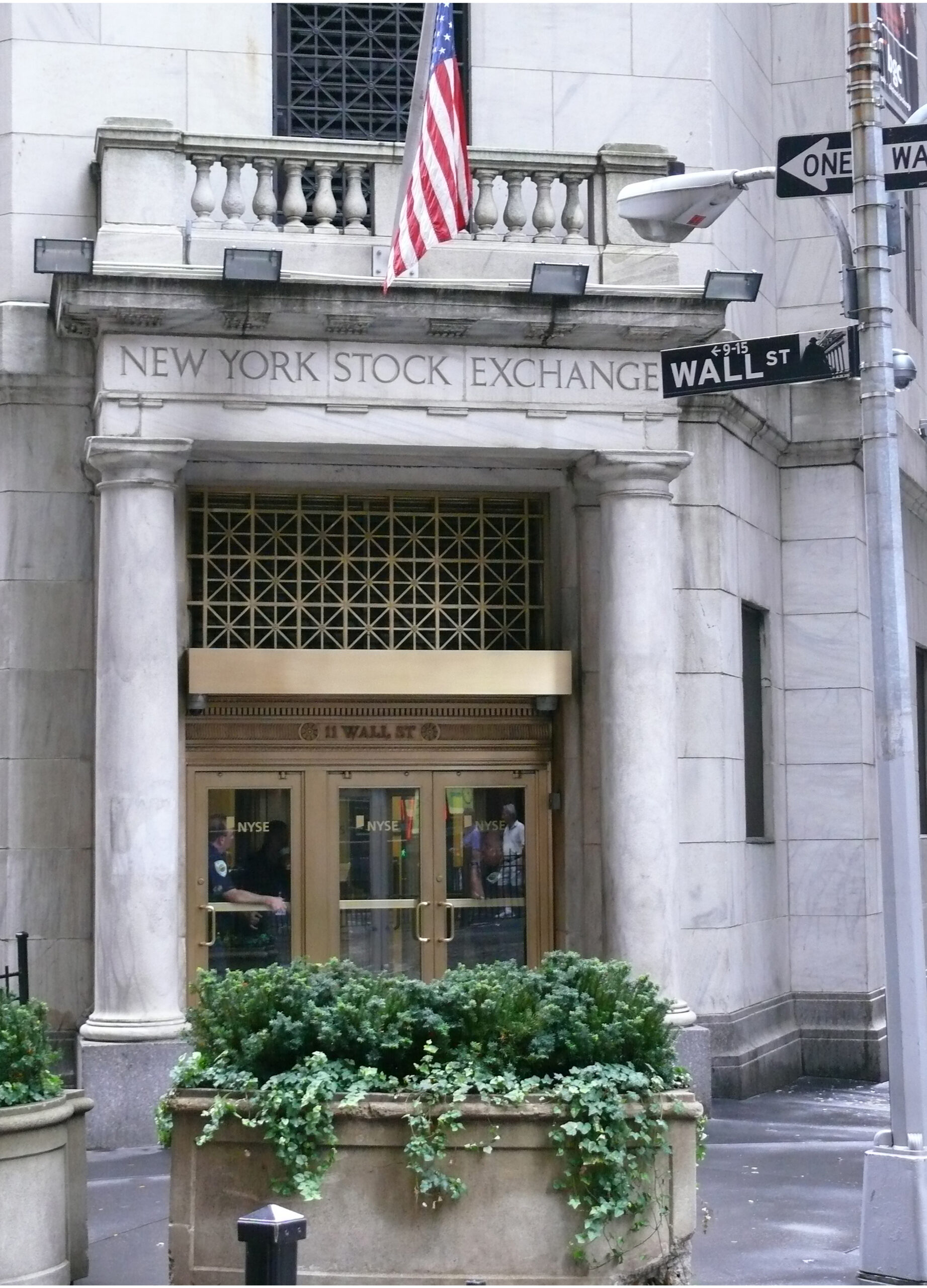
While diplomats struggled abroad, American investors were beginning to ask a rather awkward question at home.
Where is the return on all this AI spending?
Technology companies have committed enormous amounts of capital to data centres, computing infrastructure and the development of artificial intelligence.
The investment thesis has been straightforward: spend heavily now, build the infrastructure, and collect the rewards later.
But the distance between spending and earnings is beginning to concern investors.
Friday delivered a sharp reminder.
Intel suffered an extraordinary collapse after disappointing guidance, while concerns over Amazon’s investment commitments contributed to wider technology-sector pressure.
The Nasdaq fell approximately 2.9% on Friday.
At almost any valuation, the promise of future profits matters. At elevated valuations, the timing and scale of those profits become even more important.
There is a second complication.
The Federal Reserve held interest rates this week, with two policymakers favouring an increase rather than a reduction.
This is hardly the monetary environment investors once imagined would accompany the next stage of the technology revolution.
Higher financing costs reduce the present value of distant future earnings. They also make borrowing more expensive for the companies building the infrastructure.
Why it matters: AI may transform the global economy. That does not mean every investment made in its name will produce an acceptable return.
History is full of genuinely transformative technologies that nevertheless produced disappointing investments along the way.
How Global Markets Responded
American equities ended the week on the defensive.
The S&P 500 declined approximately 0.6%, while the Nasdaq fell around 2%. Smaller companies fared relatively better across the full week, with the Russell 2000 gaining approximately 1.3%.
It was another reminder that the American stock market is not one uniform trade.
Europe showed greater resilience. The STOXX Europe 600 recorded a weekly gain, even as investors continued to weigh energy costs, trade pressure and the outlook for regional interest rates.
In Asia, Japanese and Hong Kong equities also advanced over the week, although both remain exposed to the broader consequences of global interest-rate policy, energy prices and international trade.
Government bonds attracted demand during Friday’s equity sell-off, but the larger inflation problem has not disappeared.
And oil remains particularly sensitive to developments in the Middle East.
The important observation is not that every market moved in the same direction. They did not.
It is that the forces driving them are becoming increasingly connected.
Here is the complete Monday-to-Friday comparison using closing market readings.
Monday vs Friday — October 26–30, 2026
| Indicator | Monday | Friday | Change |
|---|---|---|---|
| S&P 500 | 7,676.77 | 7,580.07 | −1.26% |
| Nasdaq Composite | 26,169.38 | 25,437.00 | −2.80% |
| Dow Jones | 52,361.58 | 51,770.31 | −1.13% |
| Russell 2000 | 2,786.42 | 2,811.84 | +0.91% |
| STOXX Europe 600 | 640.66 | 646.75 | +0.95% |
| Nikkei 225 | 62,189.65 | 63,290.11 | +1.77% |
| Hang Seng | 23,211.81 | 23,294.42 | +0.36% |
| US 10-year Treasury yield | 4.986% | 4.929% | −5.7 bp |
| Brent crude* | $110.18 | $112.30 | +1.92% |
| WTI crude* | $101.30 | $102.97 | +1.65% |
| Gold* | $4,027.10 | $3,885.70 | −3.51% |
| VIX | 18.39 | 19.42 | +5.60% |
What to Watch Next Week
Three developments deserve particular attention.
First, the American midterm elections on Tuesday, November 3, will determine the balance of power in Washington. The result could affect fiscal negotiations, regulation, trade and the administration’s political room for manoeuvre.
Second, Friday’s U.S. employment report will provide another test of the Federal Reserve’s increasingly difficult position. Strong employment alongside persistent inflation would strengthen the argument for keeping monetary conditions restrictive.
Third, developments in the Strait of Hormuz will tell us whether diplomacy is producing genuine improvements in security or simply another round of hopeful announcements.
There is also the continuing question of whether technology companies can persuade investors that their AI investments will eventually justify their cost.
The Lens
There is an old temptation in financial markets to treat political developments as temporary distractions.
Sometimes they are.
But wars that disrupt shipping, governments that struggle to cooperate and central banks that cannot confidently declare victory over inflation are not merely background noise.
They influence the cost of energy, the price of credit, the direction of capital and ultimately the valuation of businesses.
This week, the diplomats were talking, the tankers were under threat and investors were finally asking difficult questions about the cost of technological ambition.
The common thread is confidence.
Confidence that goods can move. Confidence that governments can cooperate. Confidence that future profits will justify today’s prices.
And confidence, as markets have reminded us many times, is remarkably easy to lose.
Markets move fast. We slow them down.
The Impartial Lens — Independent perspective on markets, politics and the forces shaping our world.