Washington wanted Russian diesel. Ukraine wanted Russian refineries burning. Iran was making oil expensive to ship. By Friday, foreign policy and economic reality were becoming difficult to separate.
The Weekly Lens | October 12–16, 2026
On Friday, Donald Trump called Ukraine’s attacks on Russian oil refineries a “disgrace.”
An extraordinary complaint from the president of a country that has spent years sanctioning Russia’s energy industry.
But Washington had a problem. The world needed diesel, America wanted cheaper fuel, and Ukraine was attacking facilities that produced some of it.
For Kyiv, those refineries help sustain Russia’s war effort. For Washington, their production had suddenly become rather useful.
Welcome to the strange economics of modern warfare, where yesterday’s sanctioned commodity can become today’s urgently needed supply.
And that was only one of the week’s contradictions.
As Washington sought Russian diesel, fighting around Iran kept shipping expensive, tanker operators charged extraordinary rates, and US officials considered relaxing restrictions on ships previously excluded from regular commerce.
When the Sanctions Meet the Petrol Pump
As Monday’s Daily Lens explored, increasing fuel supply is only part of the problem.
On October 9, the US Treasury authorized certain transactions involving Russian-origin diesel. The reason was practical: refined fuel supplies were tight and prices were high.
But if sanctions are designed to limit Russia’s revenue, what happens when countries imposing them decide they need the product?
Kyiv was hardly enthusiastic. After Russian strikes continued damaging Ukrainian power infrastructure, Ukraine said a proposed energy truce had failed and resumed attacks on Russian refineries, including at Ryazan.
On Friday, Trump condemned the renewed attacks. Zelensky defended Ukraine’s position. Moscow disputed the accounts surrounding the truce.
The disagreement exposed something more interesting than another exchange of insults. Ukraine wants to impose costs on Russia’s military and economy. Washington increasingly wants the global economic consequences contained. Those objectives do not always fit together.
Europe faces its own dilemma: maintain pressure on Moscow while protecting consumers and industries exposed to expensive energy. A sanction is easier to defend politically when the bill doesn’t arrive at your own petrol pump.
An $81 Million Shipping Bill
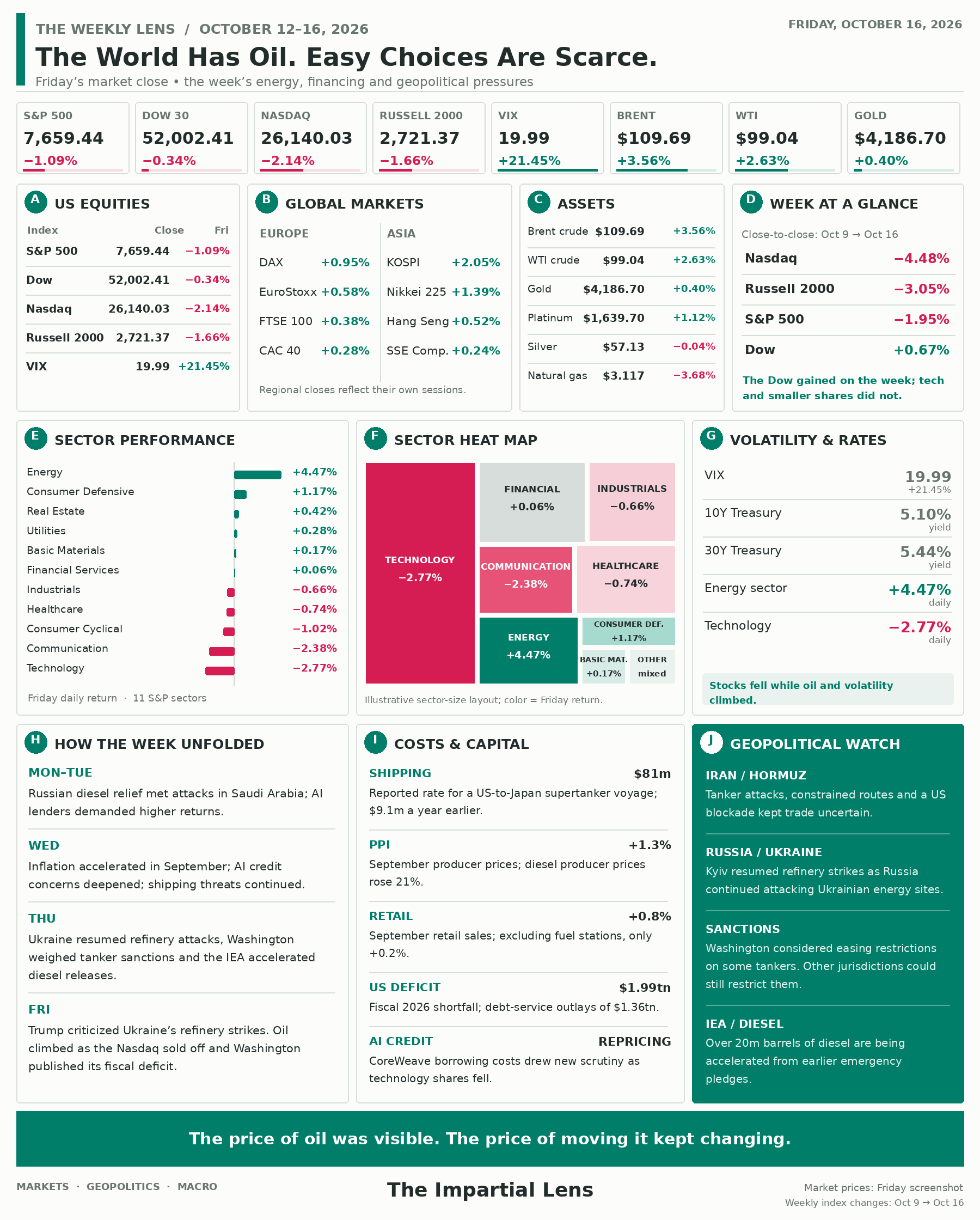
A supertanker named Esteem Explorer is preparing to move about two million barrels of crude from the United States to Japan. Its reported freight bill is $81 million.
Reuters reported that the same journey cost around $9.1 million on average a year earlier. The crude itself costs extra.
The tanker isn’t even travelling through Hormuz. That’s what makes the number remarkable.
Fighting and shipping restrictions around the Gulf have reduced available tanker capacity and encouraged longer voyages. Vessels operating elsewhere become dearer to hire. Oil can be plentiful in one place and prohibitively expensive to deliver somewhere else.
On Thursday Washington was reportedly considering relaxing restrictions on selected shadow-fleet vessels to increase shipping capacity.
There is irony in seeking relief from ships previously excluded from mainstream trade. And the benefit may be limited: ageing vessels, insurance difficulties and continuing European restrictions don’t disappear with an American policy change.
Some tanker rates eased from record highs Friday. That was welcome, but freight remained exceptionally expensive and the underlying conflict was unresolved.
Meanwhile, the International Energy Agency accelerated emergency fuel-stock releases, including more than 20 million barrels of diesel. Useful relief, certainly. But releasing fuel sooner doesn’t create a refinery or guarantee safe passage through a threatened shipping lane.
The Bill Reached the American Consumer
Thursday’s economic reports showed what happens when energy costs spread through the economy.
September producer prices rose 1.3%, their largest monthly increase in over four years. Diesel producer prices jumped 21%, and truck-freight transportation prices increased 3.8%.
These are September numbers, not an effect of this week’s attacks. They show pressure that had already been building.
Then came an apparently encouraging retail report. Americans spent 0.8% more in September. Unfortunately, gasoline-station sales jumped 6.4%. Excluding petrol stations, sales rose only 0.2%.
A motorist paying more for the same tank doesn’t become wealthier. But the economy records more spending.
Higher fuel bills also affect trucking, farming, construction and delivered goods. The Federal Reserve can raise rates to restrain demand. It cannot manufacture diesel.
Wall Street Noticed the Bill
By Friday, markets were sending noticeably different signals across sectors.
Our supplied Friday dashboard showed Brent crude at $109.69, up 3.56% on the day. Energy shares gained 4.47%, while technology fell 2.77%. The Nasdaq lost 2.14% and the VIX jumped 21.45% to 19.99.
For the full week, the Nasdaq declined approximately 4.48%, the S&P 500 lost about 1.95%, and the Russell 2000 fell around 3.05%. Yet the Dow gained roughly 0.67%.
That last number matters. Investors weren’t abandoning every business. They were becoming more selective about what future earnings were worth.
AI offered another reason for caution. Its enormous infrastructure programme increasingly requires outside financing; lenders were scrutinizing whether future revenue could support the borrowing. As Wednesday’s Lens explained, a customer can love the technology while a creditor dislikes the balance sheet.
And Washington’s own numbers brought another bill. The US closed fiscal 2026 with a deficit of about $1.99 trillion and debt-service outlays around $1.36 trillion, according to Reuters.
Government borrowing and AI infrastructure loans are very different risks. But neither is indifferent to the price of money.
What to Watch Next Week
- Does diplomacy change what happens on the ground? A ceasefire becomes meaningful when refineries stop burning and ships sail more safely.
- Does fuel become cheaper to deliver? Watch tanker rates, insurance, diesel availability and refinery output—not crude alone.
- Will the market’s divide widen? The Dow gained for the week while the Nasdaq fell sharply. Watch whether credit concerns spread beyond heavily financed AI ventures.
The Lens
This was not simply a week of expensive oil or falling technology shares.
Washington wants to constrain Russia while buying its diesel. Ukraine wants to weaken Russia while retaining American support. Europe wants sanctions that hurt Moscow without imposing intolerable costs at home. And war involving Iran is raising transport costs for countries far from the fighting.
Each position has a rationale. The problem is what happens when they collide.
Governments can open reserves, adjust licences and announce ceasefires. Markets can price each announcement in seconds. The physical economy still needs functioning refineries and ships that can make the journey.
Washington tried to make the wars accommodate the oil market. By Friday, the oil market was becoming part of the negotiations.
The Impartial Lens provides market commentary and education only. Nothing published here constitutes investment advice.
Featured photograph: Calistemon / Wikimedia Commons, CC BY-SA 4.0, illustrating an oil tanker at a refinery jetty. Photograph is not of an incident reported in this article.